A missing molar on the lower left can feel like a small problem until a dentist explains that a traditional bridge means grinding down the two healthy teeth on either side of the gap. That detail is why the debate over dental implants vs dentures vs bridges matters so much. Each option replaces missing teeth, but they differ in how they affect your jaw, your neighboring teeth, your timeline and your long-term maintenance. This guide walks through each choice in plain terms so you can walk into your consultation in Oklahoma City, OK with the right questions.
How the Three Options Work
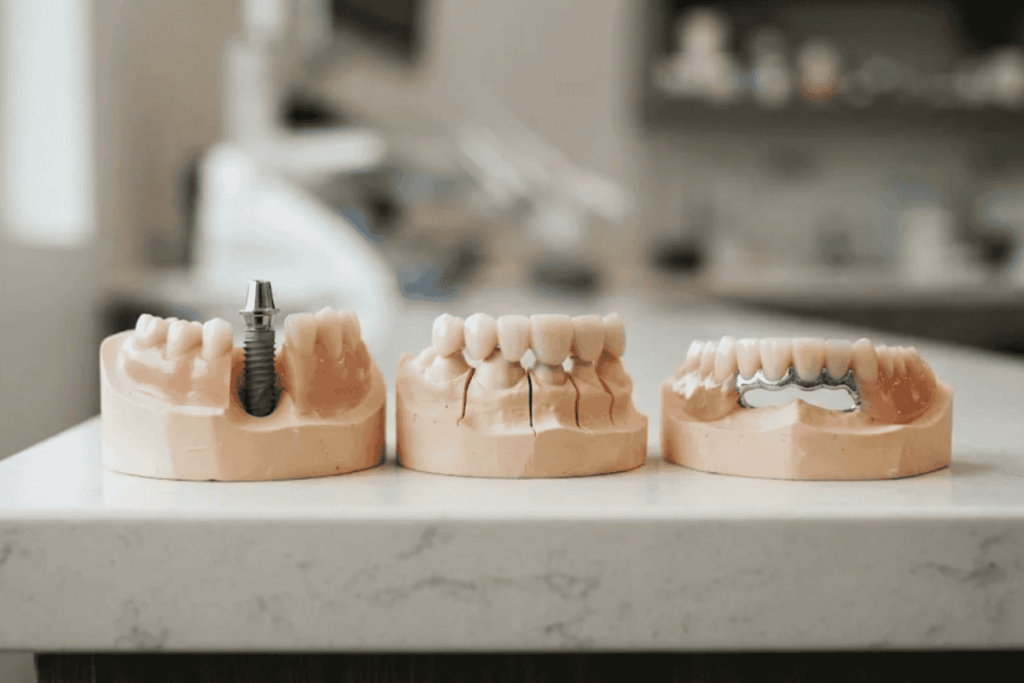
A dental implant replaces the root of a missing tooth. According to the ADA, implants are posts made of titanium and other body-compatible materials that are surgically placed in the upper or lower jaw, where they anchor a replacement tooth. A bridge fills a gap by joining an artificial tooth to the natural teeth beside the space. Dentures are removable replacement teeth that rest on the gums, and they come as complete sets or as partials that fill several gaps.
Because they work so differently, the choice is not only about appearance. It is about what you want your mouth to do over the next ten to twenty years, and what you are willing to go through to get there.
Dental Implants vs Dentures vs Bridges at a Glance
The table below puts the key differences side by side. Every figure in it is explained in the sections that follow.
| Option | Effect on neighboring teeth | Reported lifespan | Typical timeline |
|---|---|---|---|
| Dental implant | No enamel removed from nearby teeth | Varies by patient, no single figure applies | Osseointegration takes three to nine months |
| Fixed bridge | Adjacent healthy teeth are ground down | 5 to 10 years (AAID), around 15 years (Cleveland Clinic) | Shorter than an implant, no bone healing period |
| Complete denture | Rests on gums, bone beneath may deteriorate | 7 to 15 years (AAID), at least seven years (Cleveland Clinic) | Conventional dentures follow healing that may take several months |
Not sure which option fits? Contact our Oklahoma City team to schedule a consultation.
Dental Implants: The Closest Thing to a Natural Tooth
The biggest advantage of an implant is what it does not touch. The Cleveland Clinic notes that implants do not require removing enamel from nearby teeth the way bridges do. That keeps your healthy teeth intact, and the implant sits in the jawbone where a natural root once was.
The tradeoff is time, and there is no single lifespan figure for implants because results vary by patient. The same source explains that osseointegration, the process where bone grows around the implant, takes three to nine months. The ADA describes this healing as taking up to several months, and says your dentist may provide a temporary crown, bridge or denture while permanent replacements are made so you can eat and speak normally. The Mayo Clinic adds that the whole process can take many months and may include a bone graft if the jaw is not thick enough. Risks include infection, injury to nearby structures, nerve damage and sinus problems.
Candidacy matters too. Good general health is the main factor, according to the ADA, and conditions such as diabetes can interfere with healing. The Cleveland Clinic lists active gum disease, unmanaged diabetes and heavy smoking as situations where implants are not ideal. If you are replacing every tooth in an arch, that source says the plan typically uses four to six implants.
Fixed Bridges: Faster, With a Cost to Neighboring Teeth

A fixed bridge is usually the quickest fixed solution. There is no surgery in the jaw and no bone healing period. The catch is the anchor teeth. The AAID explains that a tooth-supported bridge requires grinding adjacent healthy teeth so they can hold the crowns that carry the replacement tooth. Once those teeth are reshaped, they depend on the bridge for the rest of their lives.
Lifespan is where sources differ. The AAID says bridges generally fail after 5 to 10 years, while the Cleveland Clinic says most crowns and bridges last around 15 years. Both figures are reasonable ranges to discuss with your dentist, because your bite, your hygiene and the health of the anchor teeth all affect the result.
Dentures: A Flexible Option With Adjustment Time
Dentures replace many teeth at once and can be a practical choice when most of the teeth are gone. MouthHealthy from the ADA explains that conventional dentures are placed after the gums have healed, which may take several months, while immediate dentures go in right after teeth are removed and may need relining or remaking once the jaw heals. New dentures can feel awkward for a few weeks, and daily brushing and proper storage in water keep them in good shape.
The AAID says complete dentures last an average of 7 to 15 years, while the Cleveland Clinic says most dentures last at least seven years. The AAID also points out that removable partial dentures are less stable than fixed options and that the bone beneath dentures may deteriorate over time, which is one reason many patients ask about implant support.
Questions to Ask Before You Decide
Two short checklists can help you compare your options. Use the first during your consultation and the second to weigh your own priorities.
Ask your dentist:
- Will the option I am considering require reshaping any healthy teeth?
- Do I have enough bone, or would I need a graft first?
- What temporary solution will I have while I wait for healing?
- What daily care will this option need from me?
- How long should I expect it to last given my health and habits?
Think about your own priorities:
- How quickly do I need my smile back?
- Am I comfortable with oral surgery?
- How important is protecting my neighboring teeth?
- Do I smoke or have a health condition that affects healing?
Why Choose Dentistry For You OKC
Choosing between dental implants vs dentures vs bridges often comes down to restoration options, and this practice offers dentures and partial dentures and fixed dental bridges as well as implant placement and restorations, so your options are not narrowed by what a single office happens to provide. That means the recommendation can follow your mouth, not a limited menu. Digital imaging gives the team a clear look at your bone and surrounding teeth before a plan is made, and sedation dentistry is available for patients who are nervous about procedures like implant surgery.
The office at 12321 Hidden Forest Blvd in Oklahoma City, OK also accepts most insurances and offers financing through Cherry, which matters when a multi-visit plan needs to fit a budget. Appointments are available in Spanish and Vietnamese, so the whole conversation about your options can happen in the language you are most comfortable with. Dr. Thanh Dao and Dr. Mark Vandenberg can walk through the pros and cons with you before anything is scheduled.
Conclusion
There is no universal winner in the comparison of implants, bridges and dentures. Implants protect neighboring teeth but take the longest. Bridges are quicker but rely on grinding healthy anchor teeth. Dentures replace many teeth at a time and need regular adjustment and care. The right answer depends on how many teeth are missing, the health of your gums and bone, and your timeline.
If you already have implants or are planning them, our guide on caring for dental implants explains how to protect your investment. You can also visit our page on bridges for details on that treatment.
Ready to compare your options? Call or contact our Oklahoma City office to book your visit.
Frequently Asked Questions
Which is better, a dental implant or a bridge?
Neither is better for everyone. An implant does not require grinding down adjacent teeth and is placed in the jawbone, but it takes several months to heal. A bridge is usually faster, yet it depends on reshaping the healthy teeth beside the gap.
How long do dentures last compared to implants?
Complete dentures last an average of 7 to 15 years according to the American Academy of Implant Dentistry. Implants do not have a single lifespan figure because results depend on bone health, hygiene, smoking and overall health.
Are dental implants painful?
Implant surgery is typically done with local anesthesia, and some patients also choose sedation. Soreness, swelling and mild bruising are common in the days afterward and usually improve with the care instructions your dentist provides.
Can you get implants if you already wear dentures?
Often yes, as long as you have enough healthy jawbone or can have a bone graft first. Some patients use implants to hold dentures more securely. A dentist needs to examine your bone with imaging before confirming this.
What is the cheapest way to replace a missing tooth?
Removable partial dentures and fixed bridges often cost less up front than implants. Over time, replacement and maintenance needs can change the full picture, so it helps to compare long-term costs, not only the first bill.