
Skip to content Call Us: (405) 722-7767

A dental bridge replaces one or more missing teeth by connecting a replacement tooth to the teeth on either side of the gap. Unlike a removable partial denture, a traditional bridge is cemented in, so there’s nothing to take out at night.

At Dentistry For You OKC, Dr. Dao can help you decide whether a porcelain bridge, a dental implant or a partial denture fits your missing tooth best. That decision depends on the health of the nearby teeth, your overall oral health, your budget and what you want from treatment.

Why Replace a Missing Tooth?

A missing tooth may not hurt, particularly one toward the back of your mouth. Still, an open gap can affect your bite and the teeth around it.

Over time, neighboring teeth may tip or drift into the space, and the tooth above or below may move out of position. It doesn't happen to everyone, but when it does, it can change how your teeth come together and make some areas harder to clean.

The jawbone where the tooth used to be can also shrink, since there is no longer a root to stimulate it. That can change your options later, including whether you'd need a bone graft before an implant.

Replacing the tooth can help you chew comfortably and keep your bite more balanced. Dr. Dao can examine the area and let you know whether replacing it is a good idea.

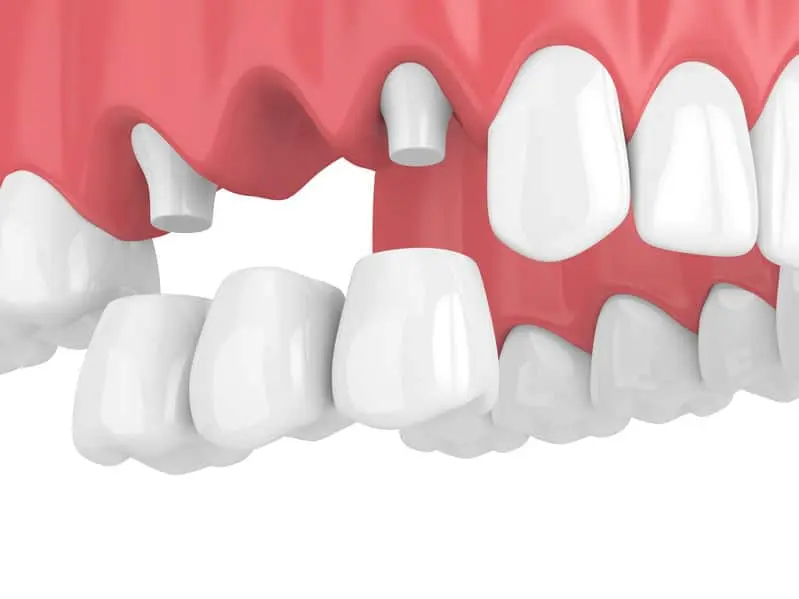
A dental bridge on a working model
An illustration of a bridge spanning a gap between teeth

How a Dental Bridge Works

A traditional bridge relies on the teeth on both sides of the gap for support. Those teeth are prepared for crowns, and the crowns are connected to a replacement tooth called a pontic.

The bridge is made as a single piece and cemented in place. Once it’s in, it serves as a fixed replacement for the missing tooth, and the porcelain is shaded to blend with your natural teeth.

The supporting teeth have to be healthy and strong enough to carry the extra load. Dr. Dao will check those teeth, the size of the gap and your bite to see whether a traditional bridge is a good option.

Bridge, Implant or Partial Denture: Which Fits?

There’s more than one way to replace a missing tooth, and each option has pros and cons.

Dental Bridge

A bridge can make sense when the teeth beside the gap already need crowns, or when an implant isn’t a good match. It stays in place and doesn’t require implant surgery.

The trade-off is that the supporting teeth usually need to be reshaped to hold the bridge, even if they were healthy to begin with.

Dental Implant

An implant replaces the root of the missing tooth and supports a crown without depending on the teeth next to it. It may help protect bone in that area, but it involves surgery and a healing period that can take several months. Some people also need added steps, like a bone graft.

An implant is worth considering when the neighboring teeth are healthy, though whether it’s right depends on your situation.

Read more on our dental implants page.

Removable Partial Denture

A partial denture replaces one or more missing teeth with an appliance you can remove. It usually doesn’t require reshaping nearby teeth the way a bridge does, and it often costs less up front.

On the other hand, it comes out for cleaning, and it can feel different from a fixed tooth when you eat or speak.

Visit our dentures page to learn more.

The best choice is different for everyone. We’ll walk through the options for your gap, including the benefits, the limits and the costs, before you make a decision.

Getting a Bridge: What to Expect

A traditional bridge usually takes two visits, because a dental laboratory makes the final bridge.

First Visit

The supporting teeth are numbed and shaped for their crowns. Dr. Dao then takes impressions and chooses a shade that blends with your natural teeth. If the dentist makes you nervous, let us know, and we’ll explain each step before it happens.

A temporary bridge may be placed to protect the prepared teeth while your permanent bridge is being made.

Second Visit

Once your bridge is ready, Dr. Dao checks the fit, how the replacement tooth rests against the gum, the color, and how your bite comes together.

Any adjustments are made before the bridge is cemented. Our team will also show you how to clean under the replacement tooth and care for the teeth that support it.

Cleaning and Caring for Your Bridge

Cleaning under a bridge is especially important, since food and plaque can collect around the replacement tooth and along the gumline.

Because a bridge is one connected piece, you can’t floss between its joined teeth the usual way. A floss threader, bridge floss or a small interdental brush can help you clean under the replacement tooth.

Our hygienists can show you the method that works best for your bridge.

Good daily care helps protect the gums and supporting teeth from decay and inflammation. Keep brushing twice a day, clean under the bridge the way we showed you, and come in for regular checkups. Call us if the bridge feels loose or uncomfortable, or if the gums around it swell or bleed.

How long a bridge lasts depends on the health of the supporting teeth, your bite, the materials used and how well you care for the area.

Talk About Your Tooth Replacement Options in Oklahoma City

If you’re missing a tooth, you don’t need to have a treatment chosen before you come in. Dr. Dao can examine the area, explain your options, and help you compare a bridge, an implant and a partial denture side by side.